Seat Selection Tips for Long-Haul Elderly Travel
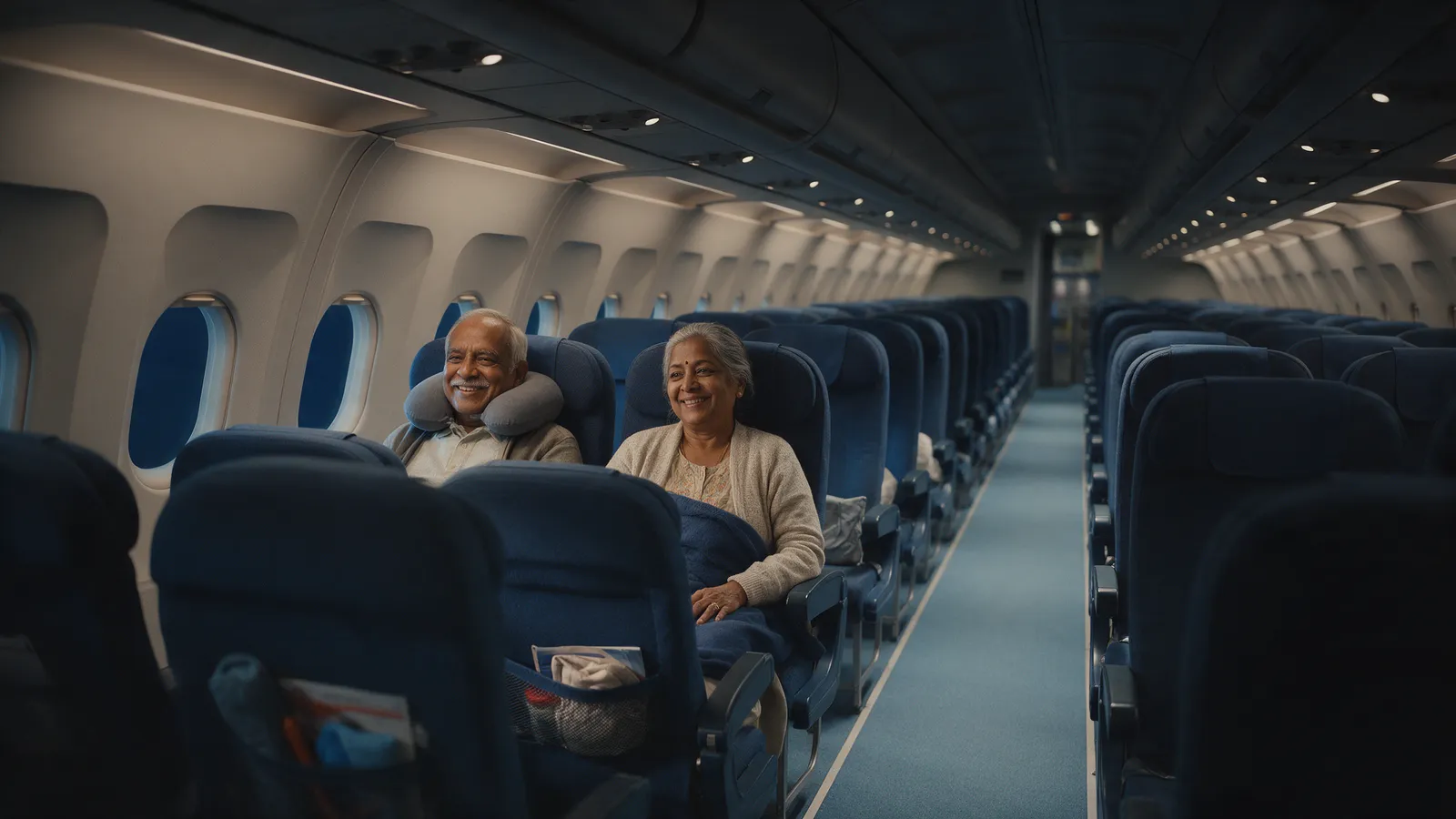
Your father sat in a middle seat for 14 hours.
Between two strangers. No easy bathroom access. Couldn't stretch his legs. Arrived in Australia exhausted and miserable.
Seat selection isn't a luxury for elderly parents.
It's a necessity.
The right seat makes a 14-hour flight bearable. The wrong seat makes it torture.
Why Seat Selection Matters More for Elderly
Young travelers can tolerate bad seats.
Elderly travelers cannot.
Physical issues on long flights:
- Deep vein thrombosis (DVT) risk increases with age
- Bladder capacity decreases (more frequent bathroom trips)
- Joint stiffness from sitting
- Circulation problems
- Back pain from poor posture
- Difficulty sleeping in upright position
The right seat helps with:
- Easy bathroom access (aisle)
- Leg stretching room (bulkhead, exit vicinity)
- Less walking to/from seat (front of cabin)
- Ability to recline properly (not last row)
- Comfort during sleep attempts
Up to 10% of elderly travelers fail to board because they lack proper assistance planning, including appropriate seat selection for their medical conditions.
How to book flights for elderly parents covers complete booking strategy including seating.
Best Seat Locations for Elderly Parents
Aisle Seats (Absolute Priority)
Non-negotiable for elderly travelers.
Why aisle is essential:
- Bathroom access without disturbing others (elderly need bathroom 5-8 times on long flights)
- Can stand up to stretch (prevents DVT, reduces stiffness)
- Less claustrophobic
- Can reach overhead bin without help
- Exit faster when deplaning
Which aisle:
On wide-body aircraft (most international flights), there are 2-3 aisles.
Best aisles in order:
- Left or right outer aisle (window-aisle-aisle configuration)
- Only one seat to cross to reach aisle
- Usually quieter than center section
- Center section aisle (middle-aisle-middle configuration)
- If outer aisles unavailable
- Two seat neighbors instead of one
Never book middle seats for elderly parents.
Middle = trapped. Disturbing two people every bathroom trip.
Bulkhead Rows (Extra Legroom)
Bulkhead = first row of each cabin section. Wall in front instead of seats.
Advantages:
- 3-6 inches extra legroom
- No one reclining into your space
- Can stretch legs forward
- More room to stand/move
- Easier to get up from seat
Disadvantages:
- Armrests don't lift (built-in tray table)
- No under-seat storage (carry-on must go overhead during takeoff/landing)
- Sometimes near bathrooms (noise, odor, traffic)
- Can be colder (near galley)
Best for:
Parents who need legroom and don't mind trade-offs.
Avoid if:
Parent struggles with overhead bin access or wants to keep bag at feet.
Front of Cabin (Rows 5-15)
Why front is better:
- First off plane (less standing/waiting)
- Less walking to exit
- Smoother ride (less turbulence)
- Quieter (away from engines and galleys)
- Better air circulation
Distance matters:
- Row 10 to exit: 50-100m walk
- Row 45 to exit: 150-300m walk
For elderly with mobility issues, this difference is significant.
Premium economy consideration:
Front of economy cabin often overlaps with premium economy.
Upgrade to premium ($300-600 extra) gets:
- More legroom (5-7 inches)
- Wider seats (2-3 inches)
- Better recline
- Usually rows 5-12 (front cabin)
For elderly parents on 14+ hour flights, premium economy is worth considering.
Exit Row Seats (Avoid for Elderly)
Airlines prohibit or restrict exit row seating for elderly passengers.
Why:
- Must be able to operate emergency exit (50+ pounds)
- Must be able to assist in evacuation
- Must follow crew instructions in English
- Must be physically capable
Age limits vary:
- Some airlines: No passengers over 60 in exit rows
- Others: No passengers over 65
- Many: Discretion of crew (they can deny elderly passengers)
Don't book exit rows for parents over 60.
Even if allowed to book online, crew can reassign at gate. Not worth the risk.
Worst Seats for Elderly (Avoid These)
Middle Seats
Why terrible:
- Trapped between two people
- Bathroom access requires disturbing both neighbors
- Can't stand easily
- Feels claustrophobic
- No control over space
How to avoid:
- Pay for seat selection ($30-80 per segment)
- Book early when aisle seats available
- Check seat map 24 hours before flight (sometimes opens up)
Last Row of Section
Problems:
- Seats don't recline (or recline very little)
- Right in front of bathroom (smell, noise, constant traffic)
- Near galley (crew conversations, meal prep noise)
- Last to deplane
- Vibration from back of aircraft
How to identify:
- Look at seat map
- Last row before bathroom/galley
- Usually marked as "limited recline"
Seats Near Bathrooms (Unless Strategic)
Rows immediately next to lavatories:
Negatives:
- Constant foot traffic
- People queueing near your seat
- Bathroom odor
- Door noise
- Light from bathroom door opening
Exception:
Aisle seat 2-3 rows from bathroom can be strategic.
Close enough for quick access. Far enough to avoid worst problems.
Seat Selection Strategy by Route
Different aircraft have different configurations.
Kathmandu to Singapore (Medium-haul, 4.5 hours)
Best seats:
- Rows 15-25, aisle
- Economy is fine (short enough duration)
- Window acceptable if parent rarely uses bathroom
Avoid:
- Last 5 rows (near toilet)
- Exit rows (not allowed)
Singapore to Sydney/Melbourne (Long-haul, 7-8 hours)
Best seats:
- Premium economy if budget allows (rows 10-15 usually)
- Economy rows 15-25, aisle, outer section
- Bulkhead if parent needs legroom
Avoid:
- Middle seats
- Back half of plane (rows 35+)
- Seats near galleys
This is the longest single segment. Seat comfort matters most here.
Dubai to Sydney (Ultra long-haul, 13-14 hours)
Best seats:
- Premium economy strongly recommended (age 65+)
- Economy: Bulkhead rows, aisle only
- Rows 15-20 ideal
Avoid:
- Regular economy middle or window for elderly
- Back of plane
- Seats that don't recline
At 14 hours, this is brutal in regular economy middle seat.
If premium economy not affordable, consider:
- Extra legroom economy seats (+$80-150)
- Bulkhead seats
- Breaking journey with longer Singapore layover (rest in airport hotel)
Seats for Parents Traveling Together
Couples have different optimal seating.
Both Parents Need Aisle Access
Best configuration:
On 3-3-3 aircraft:
- Book 2 aisle seats across from each other
- Example: Seats 15C and 15H (aisle seats, across aisle from each other)
- Can see each other, chat across aisle
- Both have aisle access
On 2-4-2 aircraft:
- Book aisle seats in adjacent rows
- Example: 15C and 16C (aisle, one row apart)
On 2-3-2 aircraft:
- Book 2-seat section, both aisle and window
- Example: 15A and 15B (only 2 seats in row)
One Parent Needs Aisle, Other Okay with Window
Best configuration:
- Book aisle + window in 2-seat section
- Leave middle empty (often stays empty)
- If middle fills, offer to switch so couple sits together
- Both get decent seats
Parents Who Want to Sit Side-by-Side
Compromise:
- Book aisle + middle in 3-seat row
- Parent who needs bathroom less takes middle
- Still have access to aisle through middle seat
Not ideal, but better than:
- Both in middle seats
- Separated far apart
- Window + middle (trapped)
Booking flights for parents visiting Australia explains couple seating strategies.
When to Select Seats
At booking (best):
- Full choice of available seats
- Can see entire seat map
- Time to research aircraft layout
- No rush decisions
24-48 hours before flight (okay):
- Some seats open up as airline finalizes
- Can grab better seats if they appear
- Still time to request changes
At check-in (too late):
- Limited to leftover seats
- Often only middle seats remain
- No time to research
- Might get stuck in terrible seats
Pay for seat selection at booking time.
$30-80 per flight segment is tiny compared to total cost.
Ensures parents get appropriate seats.
How to Check Aircraft Seat Maps
Not all seats are equal even in same cabin.
Tools to research:
SeatGuru.com:
- Shows seat maps for specific aircraft
- Marks good seats (green)
- Marks bad seats (yellow/red)
- Explains why each seat is good/bad
Airline website:
- When booking, click "seat selection"
- Zoom in on seat map
- Look for bathroom locations, galleys, exit rows
How to use:
- Get booking confirmation with flight numbers
- Look up flight number on SeatGuru
- Find your aircraft type (e.g., "Boeing 777-300")
- Study seat map
- Identify best available seats
- Call airline or OTA to request those specific seats
Special Considerations
Medical Conditions
Diabetes:
- Aisle essential (frequent bathroom, blood sugar monitoring)
- Avoid seats near galley (harder to get crew attention for emergency)
Heart conditions:
- Front of cabin (easier evacuation if needed)
- Premium economy (less strain from cramped position)
Arthritis:
- Bulkhead or extra legroom (can stretch)
- Aisle (can stand frequently)
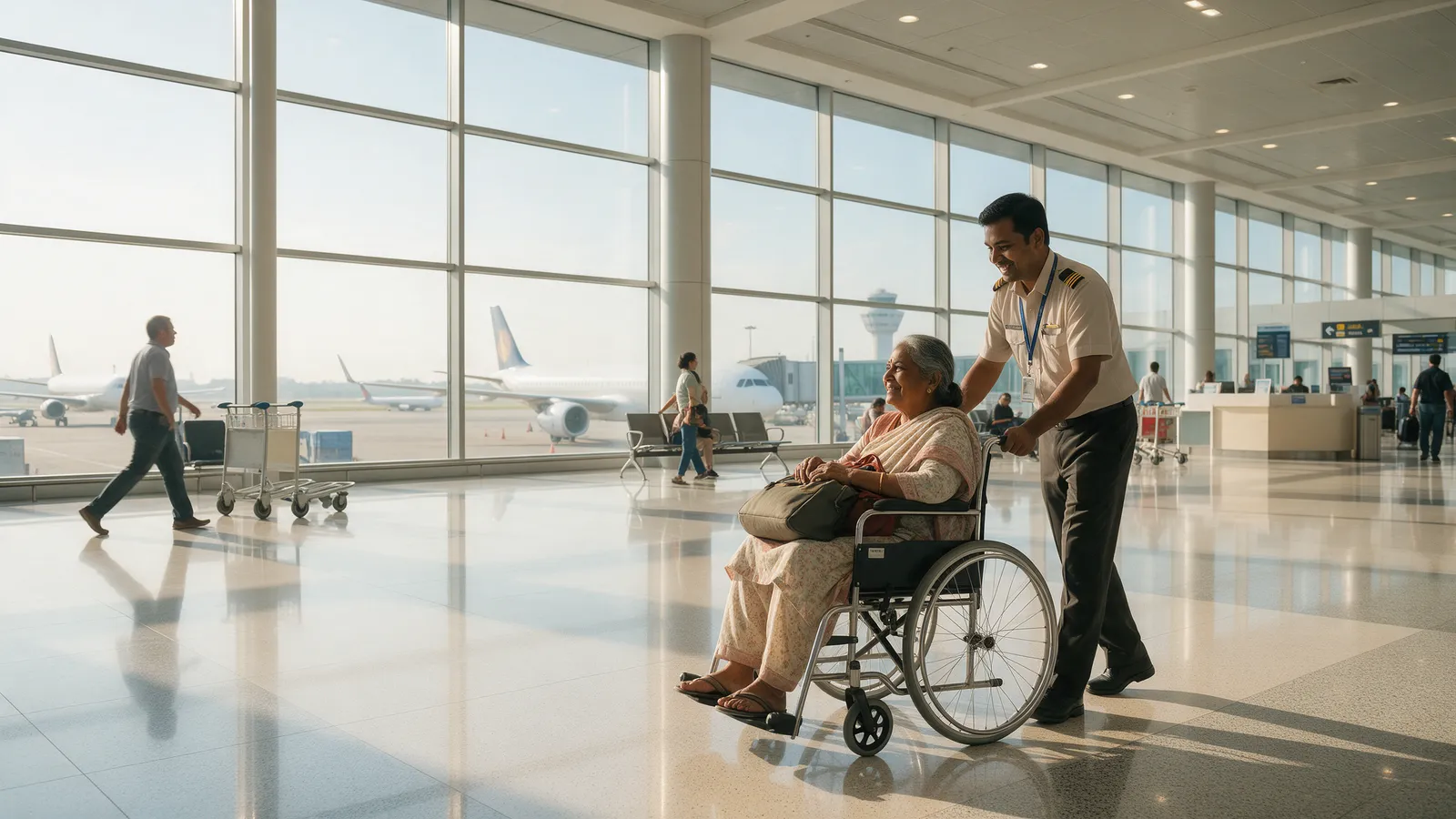
Wheelchair users:
- Bulkhead sometimes mandatory (wheelchair storage)
- Crew seats folded for wheelchair transfer
Obesity
Some elderly parents are overweight.
Seat considerations:
- Aisle (armrest sometimes raises for easier access)
- Avoid 3-seat middle (cramped for neighbor too)
- Consider premium economy (wider seats)
- Some airlines offer seatbelt extenders (request at boarding)
Airlines can require purchase of second seat if parent cannot fit in one seat with armrests down.
Better to upgrade to premium economy than pay for second economy seat.
Frequently Asked Questions
Should I pay extra for seat selection or let airline assign seats automatically?
Always pay for seat selection when booking for elderly parents. Automatic assignment often gives middle seats at back of plane. $30-80 per flight to guarantee aisle seat in front half of cabin is worthwhile. Free seat selection during check-in usually means only bad seats remain.
Can I request seat changes after booking if better seats become available?
Yes. Check seat map again 7 days before flight, then 24 hours before. Airlines release held seats at these times. Call OTA or airline to request better seats if available. Most airlines allow free seat changes up to 24 hours before departure.
What if my parents are assigned separate seats far apart?
Contact airline immediately after booking. Explain both are elderly and need to sit together. Airlines usually accommodate if requested early. If not resolved, arrive at airport extra early (4+ hours) and request at check-in. Gate agents can sometimes reassign seats.
Are bulkhead seats worth the extra cost for elderly parents?
Yes, if parent has leg/knee problems or is tall (over 5'10"). Extra legroom (3-6 inches) makes huge difference on 8-14 hour flights. However, if parent needs to keep medications/items at feet during flight, regular aisle seat with under-seat storage is better.
Can elderly parents use bassinet rows (usually bulkhead)?
No. Bassinet rows are reserved for passengers traveling with infants. Airlines won't assign elderly passengers to these rows even if no infants on flight. Choose non-bassinet bulkhead rows (airlines usually have 2-3 bulkhead rows per cabin section).
What's the best seat for elderly parent who gets airsick?
Front of cabin (rows 10-20), over the wing if possible (most stable). Avoid back of plane (more turbulence). Window seat can help (visual horizon reference), but aisle more important if nausea leads to bathroom needs. Consider aisle seat in rows 12-18 (front-center of aircraft).
Should elderly parents sit near emergency exits for faster evacuation?
No. Airlines prohibit elderly in actual exit rows. Sitting near (but not in) exit rows doesn't help in emergency—crew directs evacuation, not seat location. Better to prioritize comfort (aisle, front of cabin) than worry about emergency proximity.