Special Assistance & Wheelchair Requests Explained
Your mother can walk around the house fine.
But ask her to walk 30 minutes through an airport terminal, climb stairs to a plane, and navigate three different gates?
That's different.
Special assistance services exist for exactly this reason. They're free. They're professional. They make travel possible for elderly parents who couldn't manage alone.
Here's everything you need to know.
Why Special Assistance Matters
Airports aren't designed for elderly people.
Typical Nepal to Australia journey challenges:
- Kathmandu airport: 200-400m walk from check-in to gate
- Dubai airport: 15-25 minute walk between terminals
- Singapore airport: 10-30 minute walk (sometimes train between terminals)
- Sydney airport: 10-20 minute walk from gate to immigration
Total walking: 2-4 kilometers over 20+ hours of travel.
For an elderly person with arthritis, diabetes, or just general fatigue, this is impossible.
Wheelchair assistance makes it manageable.
Global demand for airport special assistance (wheelchairs/mobility) has seen a sharp rise, with some regions reporting requests growing to nearly 2% of all passengers in 2024.
Booking flights for parents visiting Australia explains why elderly parents need this service.
Types of Wheelchair Service
Airlines use specific codes. Knowing them ensures you request the right service.
WCHR (Wheelchair – Ramp)
What it means:
- Can walk short distances (up to 50m)
- Can climb stairs with assistance or handrail
- Needs wheelchair for long airport distances
Best for:
- Parents who are generally mobile but tire easily
- Those with mild arthritis or joint pain
- Anyone over 70 (airports are exhausting)
What service provides:
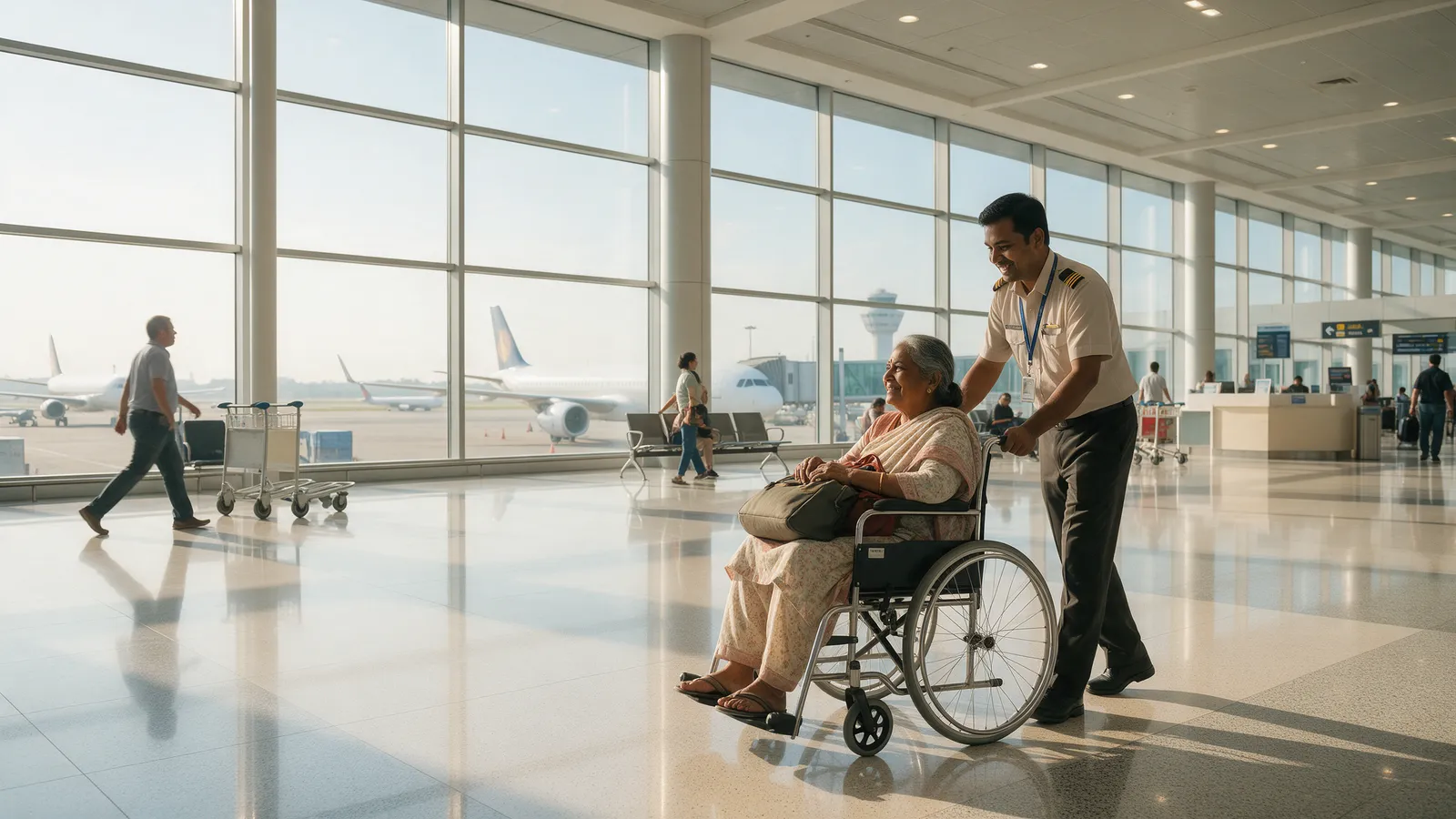
- Wheelchair from check-in to gate
- Assistance through security
- Wheelchair from arrival gate to baggage claim
- Help with immigration queues (sometimes priority lanes)
Parents walk to their seat on plane. Wheelchair isn't taken on aircraft.
WCHS (Wheelchair – Steps)
What it means:
- Can walk very short distances (under 10m)
- Cannot climb stairs at all
- Needs wheelchair and ramp/lift access to aircraft
Best for:
- Parents with significant mobility issues
- Those using cane or walker normally
- Knee/hip replacement recovery
- Severe arthritis
What service provides:
- Wheelchair from check-in to aircraft door
- Staff assists boarding via ramp or lift (not stairs)
- Wheelchair from aircraft door to baggage claim
- Priority boarding and deplaning
Parents walk short distance to seat with support. Staff helps but doesn't carry.
WCHC (Wheelchair – Cabin)
What it means:
- Cannot walk at all
- Needs wheelchair from curb to aircraft seat
- Full mobility assistance required
Best for:
- Paralyzed or severely disabled passengers
- Post-surgery recovery (major operations)
- Complete immobility
What service provides:
- Wheelchair everywhere
- Staff lifts/carries passenger to aircraft seat
- Special aisle chair (narrow wheelchair for aircraft aisle)
- Complete boarding/deplaning assistance
- Help with lavatory if needed (with special equipment)
This is most comprehensive service. Only request if parent truly cannot walk at all.
How to Request Special Assistance
Timing matters. Airlines allocate limited assistance staff per flight.
When to request:
At booking time (best):
- Guaranteed availability
- Staff pre-assigned
- Appears on ticket/reservation
- No last-minute stress
48-72 hours before flight (minimum):
- Usually still available
- Might be waitlisted on full flights
- Requires calling airline directly
At check-in (too late):
- Often unavailable
- Might be refused if staff fully allocated
- Causes delays and stress
How to request through OTA:
- Tell OTA at time of booking
- Specify which type (WCHR, WCHS, or WCHC)
- Note any other needs (oxygen, medical equipment)
- Confirm it's on booking confirmation
How to request through airline directly:
- Call airline customer service (have booking reference ready)
- Request "special assistance" or "wheelchair service"
- Specify code (WCHR, WCHS, or WCHC)
- Get confirmation number for assistance request
- Reconfirm 48 hours before flight
How to book flights for elderly parents shows exactly when to request assistance.
Meet and Assist Service
Wheelchair assistance is one thing. Meet and assist is another level.
What is meet and assist:
Dedicated airline staff member meets passenger at check-in and:
- Escorts through entire airport process
- Helps with check-in and baggage
- Navigates security
- Finds gate
- Assists with boarding
- At destination: escorts through immigration, baggage claim, customs
- Delivers passenger to family waiting area
This is the premium service for elderly non-English speakers.
Cost:
Some airlines include this free with special assistance.
Others charge:
- Emirates: ~$30-50 per airport
- Qatar Airways: ~$40-60 per airport
- Singapore Airlines: Often free for elderly passengers
Worth it?
Absolutely, if parents don't speak English and have never traveled internationally.
The staff member becomes their guide for the entire airport experience.
What Happens at Each Airport
Every airport handles assistance differently.
Kathmandu (Tribhuvan International)
Check-in:
- Request wheelchair at counter (even if pre-booked, remind them)
- Staff brings wheelchair within 10-15 minutes
- Fast-track through security
Departure:
- Wheelchair to gate
- Priority boarding (usually board first)
- Staff helps stow carry-on
Immigration:
- Sometimes separate assistance line (faster)
- Staff helps fill forms if needed
Dubai (DXB)
Arrival:
- Wheelchair waiting at aircraft door
- Fast-track through transit security
- Golf cart transport available (request at booking)
- Staff navigates to connecting gate
Facilities:
- Accessible bathrooms
- Prayer rooms
- Medical center (if needed)
Transit assistance is excellent here. Staff experienced with elderly travelers.
Singapore (Changi)
Best assistance infrastructure globally.
Singapore Changi handles over 5,000 mobility assistance requests daily.
Arrival:
- Wheelchair at gate immediately
- Multiple staff members (never waiting)
- Buggy carts for longer distances (Terminal 1 to Terminal 3)
Facilities:
- Medical centers on every level
- Accessible bathrooms everywhere
- Quiet rest areas
- Pharmacy (if parents need medication)
Staff speaks multiple languages. Some speak Hindi (close enough for basic communication with Nepali speakers).
Sydney/Melbourne/Brisbane
Arrival:
- Wheelchair at aircraft door
- Priority immigration lane (usually)
- Fast-track through to baggage claim
- Staff can help with customs declarations
Baggage:
- Staff waits with passenger at carousel
- Helps identify and collect luggage
- Pushes cart to customs
After customs:
- Staff escorts to arrivals hall
- Helps find family
- Waits until family confirms pickup
Immigration questions parents are asked explains what happens at Australian immigration with assistance.
What to Pack for Assisted Travel
Even with assistance, parents should carry essentials.
In carry-on bag:
- Medications (all of them)
- Doctor's letter listing medications
- Snacks (for energy during long waits)
- Water bottle (empty, fill after security)
- Phone and charger
- Your contact details (printed on paper)
- Passport and visa documents (in folder)
- Compression socks (for circulation)
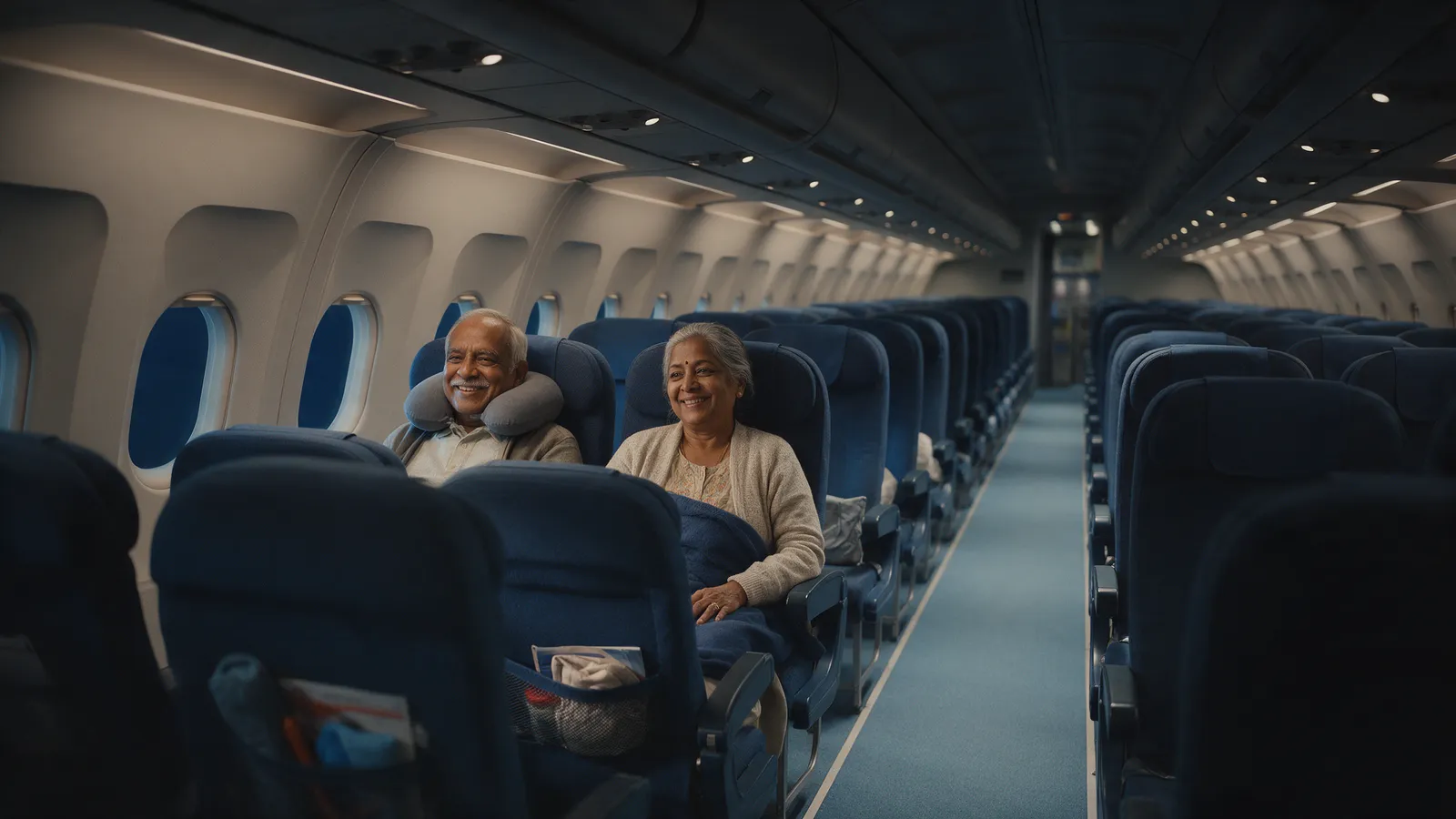
- Small pillow or neck support
On person (don't pack):
- Passport
- Boarding pass
- Cash (small amount, $50-100)
- Reading glasses
- Any critical medication for next 24 hours
Assistance staff can't carry bags and push wheelchair simultaneously. Pack light.
Common Assistance Problems and Solutions
Problem: Wheelchair didn't show up at gate
Solution:
- Tell gate agent immediately
- Show booking confirmation with assistance request
- Don't board plane until wheelchair arrives
- Airline is responsible, they must provide
Problem: Wrong type of wheelchair provided (requested WCHS, got WCHR)
Solution:
- Inform staff immediately
- Show booking confirmation
- Staff should call for correct equipment
- Don't proceed if parent can't safely use what's provided
Problem: No staff speaks English well enough to understand parents
Solution:
- Call you immediately (parents should have phone ready)
- You translate via phone
- Request English-speaking staff
- At major airports, management speaks English even if ground staff doesn't
Problem: Connection flight departing, wheelchair hasn't arrived
Solution:
- Inform gate agent
- Airlines hold flights for passengers with special assistance
- Usually 10-15 minute grace period
- In extreme cases, airline rebooks on next flight (free)
What if parents miss a connecting flight covers airline responsibilities.
Combining Wheelchair Service with Other Needs
Assistance services can be combined.
Common combinations:
Wheelchair + Special meals:
- Wheelchair service gets you to seat
- Special meal delivered to seat
- Both requested at booking
Wheelchair + Medical equipment:
- Oxygen, CPAP machines, nebulizers
- Requires advance notice (48-72 hours)
- Medical certificate from doctor usually needed
- Airline medical department approves
Wheelchair + Extra baggage:
- Medical equipment often flies free (doesn't count toward limit)
- Mobility aids (walker, cane) always free
- Wheelchair if parent brings own: flies free
Wheelchair + Companion:
- You can book seat next to parent
- Airlines sometimes allow companion to board early with assisted passenger
- Companion not eligible for wheelchair unless they also need assistance
Cost: It's Free
All wheelchair and mobility assistance services at airports are free.
Airlines cannot charge for:
- WCHR, WCHS, or WCHC service
- Priority boarding
- Assistance through terminals
- Special boarding equipment (ramps, lifts)
What might cost extra:
- Meet and assist beyond basic service ($30-60)
- Medical equipment carriage (some airlines, rarely)
- Premium lounge access during layover (optional comfort)
Basic assistance = always free = no reason not to request it.
Frequently Asked Questions
Can I request wheelchair assistance even if my parent can walk?
Yes. Wheelchair service is for anyone who cannot walk long airport distances comfortably, regardless of whether they can walk at all. If your parent can walk 50m but not 500m, request WCHR. Airlines don't require proof of disability.
How early should we arrive at airport if using wheelchair service?
4 hours before international flights. Wheelchair processing takes longer: check-in, documentation, equipment preparation, security (separate lanes), and boarding (priority boarding means earlier than regular passengers). Extra time reduces stress for both parents and assistance staff.
Do we need doctor's certificate to request wheelchair service?
No for basic wheelchair service (WCHR, WCHS). Yes for medical equipment (oxygen, CPAP) or WCHC in some cases. Airlines may request doctor's letter for WCHC to verify passenger fitness to fly, but most don't require it for standard wheelchair assistance.
What happens if wheelchair breaks or malfunctions during travel?
Airline provides replacement immediately. Wheelchairs are standard equipment at all international airports. If delay causes missed connection, airline rebbooks on next available flight at no charge. If airline's wheelchair damages passenger's personal mobility device, airline covers repair/replacement costs.
Can parents bring their own wheelchair instead of using airline wheelchair?
Yes. Personal wheelchairs can be checked free (doesn't count toward baggage allowance). Tag it as "gate check" to keep it until boarding. Airline provides their wheelchair in airport. Personal wheelchair delivered at destination gate. Battery-powered wheelchairs require advance notice (48 hours) for safety procedures.
Will wheelchair assistance speed up immigration and customs?
Usually yes. Most airports have priority lanes for passengers with mobility assistance. At Sydney/Melbourne/Brisbane, wheelchair passengers often use separate immigration counters with shorter queues. However, immigration officers still ask same questions and check same documents (no shortcuts on security).
What if parents need bathroom assistance during the flight?
Request WCHC service (most comprehensive). Inform flight attendants at boarding that parent may need lavatory assistance. Flight attendants can help escort to/from lavatory, but cannot assist inside (gender considerations). Some wide-body aircraft have accessible lavatories. Singapore Airlines and Qatar Airways have best in-flight assistance policies.