
Transit Guide for Dubai, Doha, and Singapore Airports
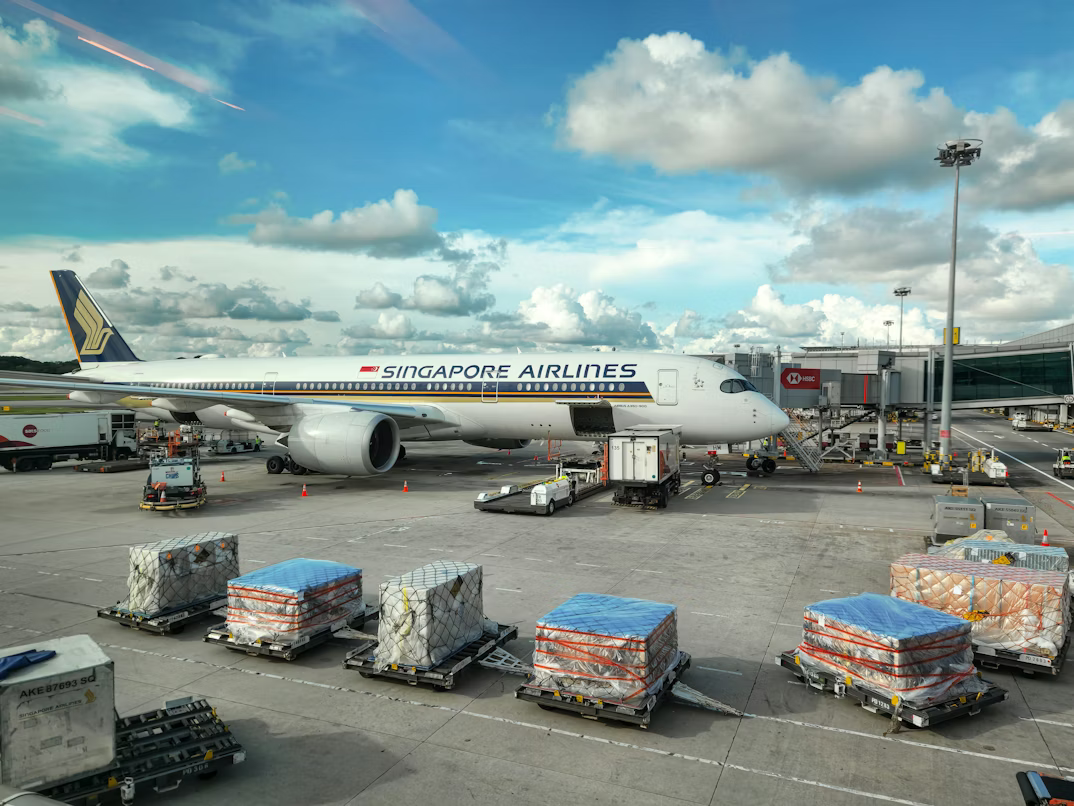
Your parents landed in Dubai.
Now they have 4 hours to find their connecting gate, navigate security, and board the next flight.
They don't speak English. They've never been in an airport this massive. They're terrified.
This guide walks through exactly what happens at each major transit hub between Nepal and Australia.
Step by step. Terminal by terminal.
Dubai International Airport (DXB) Transit
Second busiest airport in the world. 90 million passengers annually.
Massive. Confusing. But manageable with preparation.
Arriving at Dubai
Your parents' plane lands.
Step 1: Follow signs for "Connections" or "Transit"
Signs in English and Arabic. Look for airplane symbol with arrows.
Do NOT follow "Exit" or "Immigration" signs. Those lead out of airport.
Step 2: Security checkpoint
All transit passengers go through security again.
Remove electronics from bagRemove shoes (usually)
Walk through metal detector
Collect belongings
Step 3: Check departure board
Large screens showing flight numbers and gate assignments.
Parents should look for their flight number (example: QF1 or EK412).
Note gate number (example: B22).
Step 4: Walk to gate
Follow signs for appropriate concourse (A, B, or C).
Dubai Terminal 3 Layout
Most international connections use Terminal 3.
Terminal 3 has 3 concourses:
Concourse A: Gates A1-A24 (15-20 minute walk from center)
Concourse B: Gates B1-B24 (central area)
Concourse C: Gates C1-C24 (15-20 minute walk from center)
If parents need to change concourses:
Free shuttle trains connect them. Follow signs for train.
Walking distances:
Security to nearest gate: 5-10 minutes
Security to farthest gate: 20-30 minutes
Concourse A to Concourse C: 30-40 minutes with train
Dubai transit can involve 15-25 minute walks between terminals. Request wheelchair assistance at booking for elderly parents.
Transit, immigration and arrival in Australia covers complete transit process for Nepalese parents in Australia.
Dubai Transit Services for Elderly
Wheelchair assistance:
If requested at booking, wheelchair waits at aircraft door.
Staff escorts parents through security, to gate, and helps with boarding.
Language help:
Information desks throughout terminal. Staff usually speak Hindi/Urdu (similar enough to Nepali for basic communication).
Prayer rooms:
Available in all concourses. Clearly marked with symbols.
Food options:
Hundreds of restaurants and cafes. Vegetarian options widely available.
Credit cards accepted everywhere.
Rest areas:
Quiet seating areas between gates. Some with charging stations.
Dubai Common Problems
Problem: Parents can't find gate
Solution: Show boarding pass to any airport staff. Point to gate number. They'll direct or escort.
Problem: Long security queue (30+ minutes)
Solution: Tell security staff about tight connection. They sometimes allow priority processing.
Problem: Gate changed after passing security
Solution: Check departure boards every 20-30 minutes. Gate changes happen frequently.
Doha Hamad International Airport (DOH) Transit
Newer airport than Dubai. Opened 2014.
Single terminal design = less confusing for first-time travelers.
Arriving at Doha
Step 1: Exit aircraft
Follow other passengers to transit area. Clear signage in multiple languages.
Step 2: Security screening
All passengers rescreened
Remove electronics
Walk through detector
Collect bags
Step 3: Enter main terminal hall
This is the central area. All gates accessible from here.
Step 4: Check departure boards
Look for flight number. Note gate.
Step 5: Walk to gate
Gates arranged in sections (A, B, C, D, E).
All walkable. No trains needed.
Doha Terminal Layout
Single terminal with 5 concourses:
Concourse A: Gates A1-A10 (north end)
Concourse B: Gates B1-B32 (east side)
Concourse C: Gates C1-C16 (center)
Concourse D: Gates D1-D33 (west side)
Concourse E: Gates E1-E19 (south end)
Walking times from security:
Nearest gates (C section): 5-10 minutes
Mid-range gates (B, D): 10-20 minutes
Farthest gates (A, E): 20-30 minutes
Advantage: No trains or shuttles needed.
Everything accessible by walking.
Doha Transit Services
Wheelchair assistance:
Excellent service. Request at booking. Staff very professional.
Meet and assist:
Available for purchase (~$50) or free if parents have mobility issues.
Dedicated staff escorts parents gate-to-gate.
Language support:
Limited. Mostly Arabic and English. Some Hindi-speaking staff at information desks.
Facilities:
Prayer rooms
Quiet rest areas
Smoking rooms (if needed)
Duty-free shopping
Many restaurants (vegetarian available)
Medical center:
Full medical facility available 24/7. If parent feels unwell, staff can direct to medical center.
Doha Common Problems
Problem: Very long terminal (40-minute walk gate-to-gate)
Solution: Request wheelchair assistance at booking. Even if parent can walk, saves energy for actual flight.
Problem: Confusing gate numbering
Solution: Airport app available (free WiFi). Shows current location and gate location.
Singapore Changi Airport (SIN) Transit
Best airport in world for elderly travelers.
Infrastructure, cleanliness, and assistance services are exceptional.
Singapore Changi handles over 5,000 mobility assistance requests daily, making it the most infrastructure-ready hub for Nepalese seniors.
Arriving at Singapore
Step 1: Follow "Transit" signs
Very clear signage. Multiple languages including pictograms.
Step 2: Check which terminal
Singapore has 4 terminals. Most international flights use T1 or T3.
Departure board shows:
Flight number
Gate number
Terminal number (if different from arrival terminal)
Step 3: Security screening
If staying in same terminal: usually no additional security.
If changing terminals: security at new terminal.
Step 4: Navigate to gate
Within same terminal: 10-20 minute walk.
Between terminals: use Skytrain (free, automated).
Singapore Terminal Layout
Terminal 1 (T1):
Gates: B1-D41
Long terminal (split into sections)
Skytrain connects to T2 and T3
Terminal 2 (T2):
Gates: E1-F58
Connected to T1 and T3 by Skytrain
Terminal 3 (T3):
Gates: A1-B20
Most modern terminal
Direct Skytrain to T1 and T2
Terminal 4 (T4):
Separate terminal (budget airlines usually)
Free shuttle bus to other terminals
Between Terminal Connections
If parents need to change terminals:
Example: Arrive T1, depart T3.
Process:
Exit arrival gate area
Follow "Skytrain" signs
Board automated train (comes every 2-3 minutes)
Ride to destination terminal (2-5 minutes)
Follow signs to gate section
Skytrain is:
Free
Automated (no driver)
Wheelchair accessible
Easy to use
Staff available at every station to help.
Singapore Transit Services
Wheelchair assistance:
World-class. Requested at booking. Staff appears within 5 minutes of landing.
Electric buggies available for distances over 200m.
Meet and assist:
Often included free for elderly passengers. Dedicated escort gate-to-gate.
Language support:
Some staff speak Hindi/Tamil. All speak English. Translation services available via phone app at information desks.
Facilities:
Gardens (real plants and trees inside terminal)
Free WiFi (excellent speed)
Prayer rooms
Meditation rooms
Quiet zones
Showers (for long layovers)
Free movie theater (T2 and T3)
Butterfly garden (T3)
Medical center:
Full clinic with doctors and nurses. Free basic first aid. Can fill prescriptions.
Food options:
Hundreds of options. Many vegetarian. Affordable food courts ($5-10 meals).
Singapore Common Problems
Problem: Parents confused about which terminal
Solution: Boarding pass clearly shows terminal. All signs show terminal number. Staff at every intersection to ask.
Problem: Long layover (6+ hours)
Solution: Free Singapore tour available (transit visa not needed for Nepalese for short tours). Or use rest zones, movie theater, gardens.
Problem: Skytrain seems complicated
Solution: It's easier than it looks. Automated announcements. Clear signs. Staff at every station.
Which Transit Airport Is Best for Elderly Parents?
Singapore Changi: Best overall
Best assistance services
Clearest signage
Most elderly-friendly
Excellent medical facilities
Staff most helpful
Doha Hamad: Second best
Modern, single terminal
No terminal changes needed
Good wheelchair service
Less crowded than Dubai
Dubai DXB: Acceptable but challenging
Very large, easy to get lost
Long walking distances
Crowded and chaotic
But, assistance services are good if requested
Recommendation:
If price difference is small ($50-100), choose Singapore route.
If price difference is large ($200+), Dubai or Doha acceptable with proper assistance requested.
Special assistance for elderly travellers shows how to request services at all airports.
Layover Duration Recommendations
Minimum safe connection times:
Airport | Minimum | Comfortable | Ideal |
Dubai | 90 min | 3 hours | 3-5 hours |
Doha | 75 min | 2.5 hours | 3-4 hours |
Singapore | 90 min | 2.5 hours | 3-5 hours |
For elderly parents, add 30-60 minutes to comfortable time.
They move slower. Need more bathroom breaks. More easily confused.
Too short: Risk missing connection.
Too long: Exhausting to wait in airport.
Sweet spot: 3-4 hours for most elderly travelers.
Enough time to navigate without stress. Not so long they're exhausted from waiting.
Frequently Asked Questions
Do parents need transit visa for Dubai, Doha, or Singapore?
No. Nepalese passport holders get visa-free transit for short layovers: Dubai (up to 48 hours), Doha (unlimited in transit area), Singapore (up to 96 hours). Parents stay in international transit area and don't go through immigration. No visa needed unless they want to leave airport and enter the city.
What if parents miss connecting flight due to delay?
If both flights on same booking (same ticket), airline responsible for rebooking on next available flight free. If separate bookings, parents must purchase new ticket themselves. This is why booking everything on one ticket through OTA is crucial. Request wheelchair assistance to speed up transit in tight connections.
Can parents leave airport during long layover to rest at hotel?
Technically yes with transit visa (Dubai requires visa to exit airport, Singapore allows 96-hour visa-free stay). However, not recommended for elderly non-English speakers. Adds immigration, customs, transport, and re-entry stress. Better to use airport rest zones or pay for airport transit hotel (Singapore has excellent transit hotels airside).
What if parents get lost in transit and can't find their gate?
Every airport has information desks every 100-200 meters. Show boarding pass to any airport staff or fellow passenger. Most staff speak English and can direct. If desperate, call you via WhatsApp (free WiFi available at all three airports). You can help navigate via phone using airport maps online.
Should parents eat airport food or bring their own during transit?
Both. Airport food is safe and offers vegetarian options, but expensive ($10-20 per meal). Parents can bring packaged snacks from Nepal (dry foods, biscuits, nuts allowed). Fresh fruits/meats prohibited. Bring empty water bottle and fill after security (free water fountains available). This saves money and ensures familiar food available.
How do parents know when to start walking to gate?
Check departure board for boarding time (usually 30-45 minutes before flight). Start walking to gate 10-15 minutes before boarding time. For elderly parents with mobility issues, start 20-30 minutes before boarding. Better to arrive gate early and sit than rush and risk missing flight.
What if wheelchair assistance doesn't show up as requested?
Ask at airline desk or information counter immediately. Show booking confirmation with assistance request. Airlines must provide service if pre-requested. Staff will call for wheelchair. Don't proceed without assistance if parent needs it. If repeated issues, file complaint with airline after travel (may receive compensation).