
Transit, Immigration & Arrival in Australia: Nepalese Parents Travel Guide
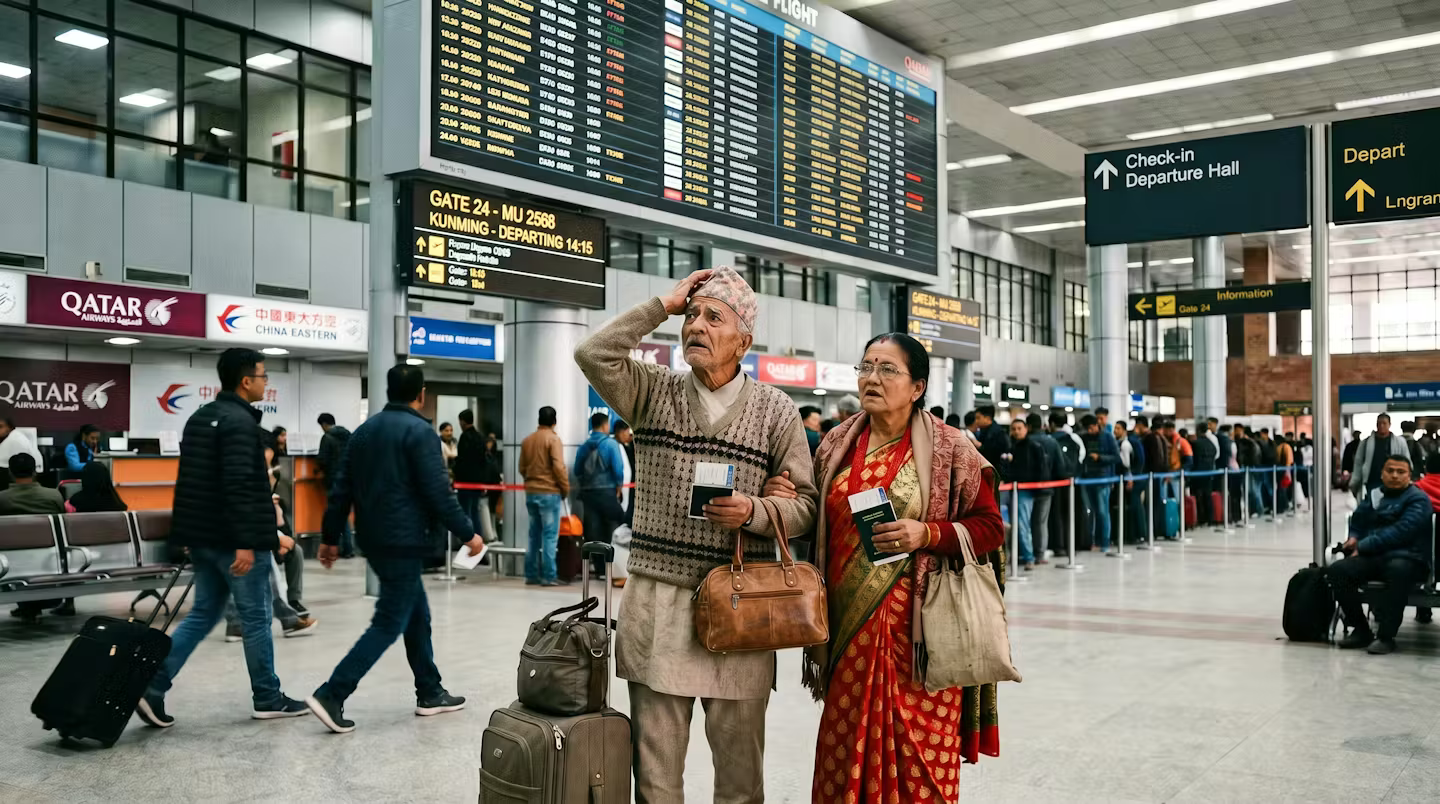
The flight is booked. Visa is approved. Bags are packed.
But your parents have one question that keeps them up at night:
"What actually happens when we get off the plane?"
They've watched YouTube videos. You've explained it over WhatsApp. But the fear remains.
Transit airports. Immigration interviews. Baggage claim. Customs declarations.
None of this exists in their world.
This guide walks through every single step your parents will take from leaving Kathmandu to arriving at your door in Australia.
Australia saw over 2.1 million international arrivals in the single month of January 2024, highlighting the massive scale of arrivals processing systems parents will navigate.
What Happens During Transit on Flights to Australia
No direct flights connect Nepal to Australia.
Every route requires at least one stop.
The three main transit hubs Nepalese travellers use are Dubai (DXB), Doha (DOH), and Singapore (SIN).
Each works differently.
Dubai, Doha, Singapore Transit Explained
Dubai (DXB) Transit:
- Typical layover: 2-6 hours
- Terminal: Usually Terminal 3
- Walking distance between gates: 10-20 minutes
- Facilities: Food courts, prayer rooms, free WiFi
- Language support: Limited Nepali, good Hindi/Urdu support
- Wheelchair assistance: Available but must be pre-booked
Doha (DOH) Transit:
- Typical layover: 3-8 hours
- Terminal: Hamad International (single terminal)
- Walking distance: 15-25 minutes
- Facilities: Excellent food, quiet rooms, free WiFi
- Language support: Limited, mostly Arabic/English
- Wheelchair assistance: Excellent, widely available
Singapore (SIN) Transit:
- Typical layover: 2-5 hours
- Terminal: Usually Terminal 1 or 3
- Walking distance: 10-30 minutes (may require train between terminals)
- Facilities: Best in class, lounges, gardens, free WiFi
- Language support: Some Hindi/Tamil, limited Nepali
- Wheelchair assistance: World-class, 5,000+ requests daily
Singapore Changi handles over 5,000 mobility assistance requests daily, making it the most infrastructure-ready hub for Nepalese seniors compared to smaller transit hubs.
For elderly parents, Singapore is the safest choice. Infrastructure, signage, and assistance services are superior.
Transit guide for Singapore, Dubai, and Doha Airports covers the layout, infrastructure, and walking instructions for these three airports.
Do Parents Need to Collect Luggage?
It depends on the ticket type.
If booked on a single ticket (same PNR):
No. Luggage is automatically transferred to the connecting flight. Parents stay in the international transit area and never touch their checked bags until Australia.
If booked on separate tickets:
Yes. Parents must:
- Collect luggage after first flight
- Go through transit immigration
- Re-check luggage for second flight
- Go through security again
This is why booking everything on one ticket through an OTA matters.
One booking = through-checked luggage = less stress for parents.
What if parents miss a connecting flight explains airline responsibilities and rebooking procedures.
How Elderly Parents Can Manage Transit Stress
Transit is the most stressful part of international travel for elderly Nepalese parents.
Everything is in English. Signs use symbols they've never seen. Thousands of people rushing everywhere.
Here's how to reduce that stress.
Airport Assistance
Special assistance isn't just for wheelchair users.
Any elderly passenger can request "meet and assist" service.
What this means:
- Airline staff meets parents at the gate when they arrive
- Escorts them through the terminal
- Helps them find the next gate
- Assists with bathroom breaks
- Ensures they board on time
This service is free on most airlines if requested at booking time.
Your parents don't need to navigate alone. Professional staff will guide them through every step.
How to request wheelchair and special assistance shows exact booking procedures.
Language Help
Most major transit airports have information desks with multi-language support.
If your parents get lost or confused:
In Dubai:
- Look for "Information" desks (blue signs)
- Staff usually speak Hindi/Urdu which many Nepalese parents understand
- Show them the boarding pass, they'll point to the gate
In Doha:
- "Information" counters throughout terminal
- Ask for Hindi-speaking staff
- Airport app available in multiple languages
In Singapore:
- Information counters every 50 meters
- Some staff speak Hindi/Tamil
- Excellent signage with pictures
The universal solution: Show boarding pass + point to the gate number. Staff anywhere will help.
Australian Immigration Process Explained Simply
This is what terrifies parents most.
Standing in front of an Australian immigration officer. Being asked questions in English. Worried they'll say something wrong and get sent home.
Let's demystify it.
Common Questions Asked
Australian immigration officers ask standard questions:
Question 1: "What is the purpose of your visit?"
Answer: "Visiting family" or "Tourism"
Question 2: "How long are you staying?"
Answer: "Three months" (or whatever matches visa)
Question 3: "Where will you be staying?"
Answer: "With my son/daughter in Sydney" + show address
Question 4: "Do you have a return ticket?"
Answer: "Yes" + show return ticket confirmation
Question 5: "Have you visited Australia before?"
Answer: "Yes/No"
That's usually it.
Officers aren't trying to trick anyone. They're verifying information matches the visa application.
Australian Visitor Visas (Subclass 600) require "Genuine Temporary Entrant" proof. Immigration officers verify visitors intend to return home after their stay.
Your parents don't need perfect English. Simple one-word answers work fine.
"Family." "Three months." "Yes." "No."
If an officer needs more information, they'll ask simpler questions or call a translator.
Immigration questions parents are asked in Australia provides practice scripts in both English and Nepali.
Required Documents
Parents must carry these documents in their carry-on bag (NOT checked luggage):
Essential documents:
☐ Passport
☐ Printed visa grant letter
☐ Return ticket confirmation
☐ Accommodation address in Australia (your address)
☐ Your contact details (phone number they can show officer)
☐ Travel insurance documents
☐ Arrival card (filled out on plane)
Supporting documents (if asked):
☐ Bank statements (showing financial capacity)
☐ Property documents in Nepal (proof of ties to home country)
☐ Invitation letter from you
Most parents only need the essential documents. Immigration officers rarely ask for supporting documents unless something seems unusual.
Keep everything in one folder. When officer asks for passport, hand them the entire folder.
What to Do After Landing in Australia
Your parents cleared immigration. Now what?
Here's the exact sequence of steps.
Baggage & Customs
Step 1: Follow signs to "Baggage Claim"
Big blue signs with luggage icons. Hard to miss.
Walk straight from immigration. Escalators lead down to baggage hall.
Step 2: Find your carousel number
Flight number is shown on screens. Each flight has an assigned carousel.
Look for "TG476 - Carousel 3" or similar.
Step 3: Collect luggage
Wait for bags to appear. This takes 15-45 minutes depending on airport.
Check the luggage tag matches. Don't take someone else's identical black suitcase.
Step 4: Go through Customs (Biosecurity)
This is where Australia gets strict.
Parents must declare:
- Food items (dried meat, seeds, nuts, spices)
- Wooden items
- Plant materials
- Medications (with prescriptions)
- Amounts over $10,000 AUD cash
In 2023, Australian Biosecurity officers issued over $1.5 million in fines for high-risk food items. Nepalese parents often carry dried meats or seeds which are strictly prohibited.
What Nepalese parents commonly bring that is PROHIBITED:
Dried meat (sukuti, chatpate meat)
Seeds (any kind)
Fresh fruits
Honey
Dried mushrooms
Certain spices in raw form
What is usually ALLOWED:
Commercially packaged spices
Tea bags
Packaged noodles
Closed tin/canned foods
Medications with prescriptions
When in doubt, DECLARE IT.
Declaring something that's prohibited = officer throws it away, no fine.
Not declaring something prohibited = $2,664 fine minimum (up to $6,660 for serious violations).
Biosecurity and customs guide for Nepalese parents has a complete safe vs prohibited list.
Step 5: Exit to arrivals hall
After customs, walk through automatic doors to arrivals hall.
This is where you'll be waiting to meet them.
Meeting Family
Sydney, Melbourne, and Brisbane airports all have designated meeting areas in arrivals.
Sydney (Kingsford Smith):
- International arrivals exit on ground floor
- Meeting area directly outside customs exit
- Large open space with seating
Melbourne (Tullamarine):
- International arrivals on ground floor
- Meeting area in front of exits
- Look for "Meeting Point" signs
Brisbane:
- International arrivals on ground floor
- Meeting area outside arrivals hall
- Smaller than Sydney/Melbourne but well-marked
Stand near the exit doors with a sign showing parents' names.
They'll be looking for you anxiously. Make yourself visible.
SmartGate vs Manual Immigration
Australian airports use two systems: SmartGate (automated) and manual counters.
What is SmartGate?
SmartGate is a machine that scans your passport and takes your photo.
If approved, you walk through without talking to an immigration officer.
Who can use SmartGate:
- ePassport holders (passports with chip symbol on cover)
- Ages 16 and older
- Citizens of eligible countries (including Nepal from 2020)
Who should NOT use SmartGate:
- First-time visitors who don't speak English
- Elderly travellers uncomfortable with technology
- Anyone with mobility issues
- Parents carrying lots of documents
Using SmartGate can reduce arrival processing time to under 20 minutes, but travelers over 60 or those with language barriers often struggle without pre-arrival instruction.
Our recommendation for Nepalese parents:
Use manual counters on first visit.
SmartGate is fast but confusing. Officers at manual counters are helpful and patient.
If parents mess up at SmartGate, they get redirected to manual counters anyway. Might as well start there.
Common Transit and Arrival Problems (And Solutions)
Problem: Parents missed connecting flight
Solution: If booked on same ticket, airline rebbooks on next available flight free. If separate tickets, you pay for new ticket. This is why single-ticket bookings matter.
Problem: Luggage didn't arrive
Solution: Go to airline's baggage service desk immediately (near carousels). File report with baggage tag numbers. Airline delivers to your address within 24-48 hours usually. Keep receipt.
Problem: Immigration officer detained parents for questioning
Solution: Stay calm. Officers call translators if needed. Questions are standard verification. Have your Australian phone number ready. Officers may call you to confirm parents are visiting family.
Problem: Parents declared nothing but had prohibited items
Solution: If caught, expect fine $2,664 minimum. Items confiscated. Record goes on file. Future visits may involve additional screening. Always declare when unsure.
Problem: Parents got lost in transit airport
Solution: Find any airline staff or information desk. Show boarding pass. They direct to correct gate. If parents have phone/WhatsApp, you can guide them remotely. This is why meet & assist service matters.
Preparing Parents Before Departure
The arrival experience starts before parents leave Nepal.
One week before flight:
- Print all documents (passport copy, visa, tickets, your address)
- Organize in one folder parents carry at all times
- Practice immigration questions in English (record on phone)
- Pack carry-on: medications, one change of clothes, important documents
- Download WhatsApp on their phone, test calling you
One day before flight:
- Reconfirm special assistance with airline
- Check flight status
- Review arrival process one more time
- Ensure parents have your phone number written on paper (in case phone dies)
- Give them AUD $100-200 cash (for emergencies, though rare to need it)
At airport in Kathmandu:
- Arrive 4 hours early for international flights
- Check in, request wheelchair if needed
- Security check
- Immigration
- Wait at gate
- Board when called (usually elderly board first)
Booking flights for parents visiting Australia covers complete pre-departure preparation.
Final Thoughts: First Steps in a New Country
The moment your parents walk through those arrivals doors is the moment months of planning pays off.
You see their faces. They see yours. Everything they worried about is behind them.
The transit confusion. The immigration questions. The biosecurity checks.
All done.
Now they're here. In your country. In your world.
That arrival moment is worth every minute spent preparing.
Do the preparation right. Give them clear instructions. Book proper assistance. Choose good transit airports.
Make their first international journey something they'll remember with pride, not panic.
Worried about your parents navigating transit and immigration?
We at SkyTrips help Nepalese families book flights with the best transit routes and assistance services.
Frequently Asked Questions
Do my parents need a transit visa for Dubai or Singapore?
No. Nepalese passport holders get visa-free transit in Dubai (up to 48 hours), Singapore (up to 96 hours), and Doha (no time limit for transit). Parents stay in international transit area and don't go through immigration at stopover airport. Transit visas only needed if they want to leave airport and enter the city.
What happens if my parents don't understand English during immigration?
Australian immigration officers are trained to handle non-English speakers. If communication is difficult, officers call phone interpreters who speak Nepali. Parents can also request a Nepali translator. Officers won't deny entry just because of language barriers as long as documents are in order.
Can I go through immigration with my parents to help them?
No. Only passengers can enter the immigration area. You must wait in the arrivals hall. However, if parents need medical assistance or have severe language difficulties, immigration officers may allow you to be called to assist. This is rare and at officer discretion.
What should parents do if their luggage is lost or damaged?
Go immediately to the airline's baggage services desk (located near baggage carousels). File a report before leaving the airport. Provide baggage claim tags from check-in. Airline will track luggage and deliver to your address within 24-72 hours typically. Keep all receipts. Most travel insurance covers lost luggage costs.
Should parents carry all documents in checked luggage or carry-on?
Always carry-on. Keep passport, visa grant letter, return tickets, medications, accommodation address, and one change of clothes in carry-on. Never put essential documents in checked luggage. If checked bag is lost, parents still have everything needed to clear immigration and survive until bag arrives.
What food items can Nepalese parents safely bring through Australian customs?
Commercially packaged items are usually safe: packaged tea, sealed spices in commercial containers, instant noodles, biscuits. Declare everything at customs. Prohibited items include: all fresh fruits/vegetables, honey, dried meat, seeds, nuts in shell, unpasteurized dairy. When in doubt, declare it. Officers will tell you if it's allowed or must be disposed of.