
Group vs Individual Flight Booking: Which Is Actually Cheaper?
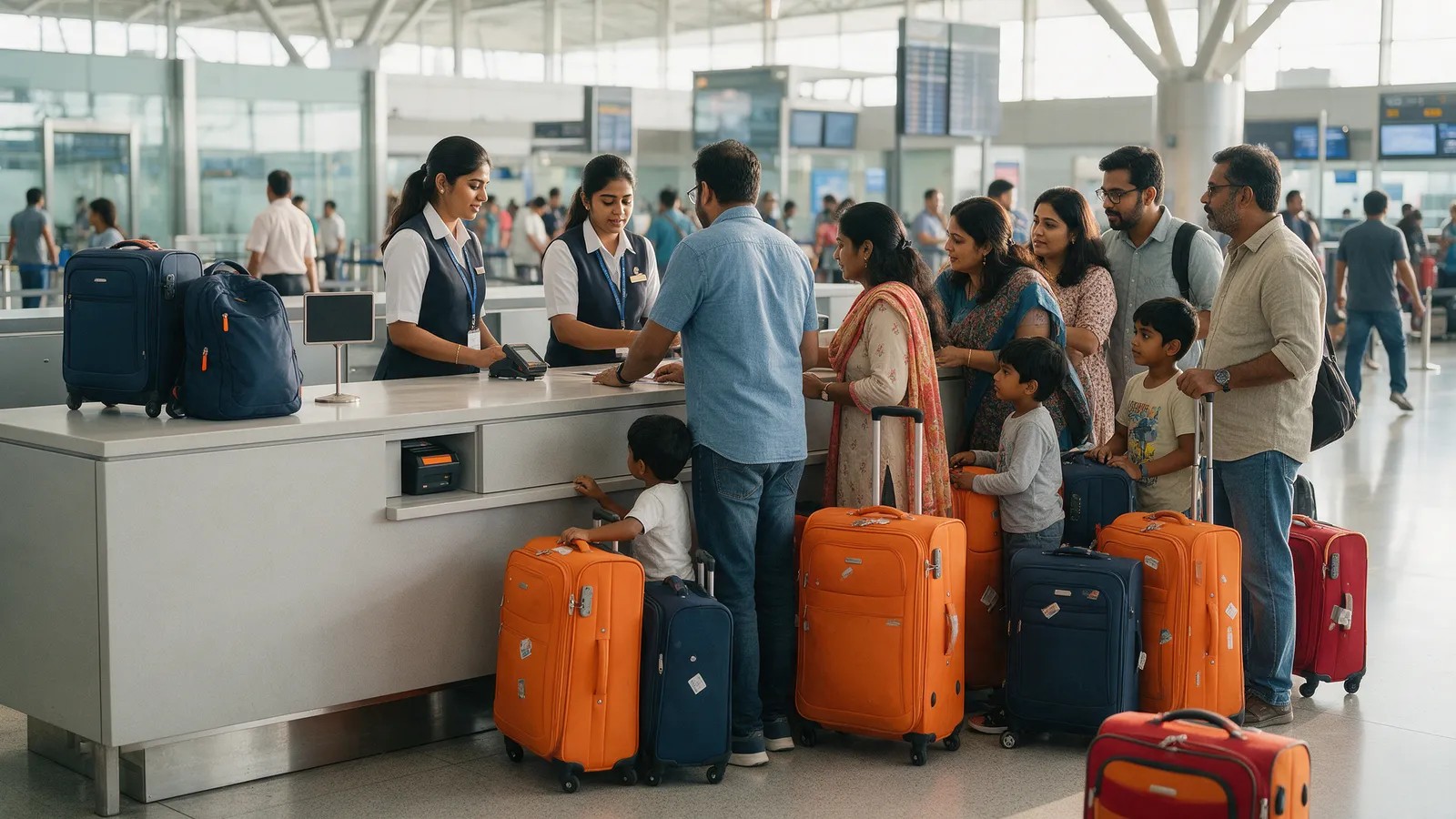
Booking flights for the whole family, a wedding party or a community trip? Most people assume that buying lots of tickets together must earn a discount. Sometimes it does, but often it doesn't. Whether a group booking or separate individual tickets works out cheaper depends on how airlines price their seats, how many of you are travelling, and when you book.
This guide explains how group fares really work, compares them with individual bookings, and shows you how to get the lowest total price for your group.
What counts as a group booking?
For most airlines, a group booking means 10 or more passengers travelling together on the same flights. Some carriers set the threshold a little lower. Group bookings are usually handled by the airline's dedicated groups desk, or by a travel agent with group access, rather than through the normal booking website.
If you're booking for, say, a family of five or six, you're technically making a "multi-passenger" booking, not a group booking. You'll pay the regular public fare, with no special group rate.
How airline pricing actually works
To understand why bigger bookings aren't automatically cheaper, it helps to know how airlines sell seats. Each flight is divided into fare classes (fare "buckets"), each with its own price. The cheapest bucket might have only a handful of seats. When those sell out, the next price level opens up.
Here's the catch for multi-passenger bookings: a single booking must put everyone in the same fare class. If you search for six passengers but only four seats remain at the lowest price, the system prices all six at the next, higher fare. You can end up paying more per person than you would have for smaller bookings.
Example: the cheapest fare has 4 seats left at $900 and the next level is $1,050. Booking 6 together costs 6 × $1,050 = $6,300. Booking 4 + 2 separately costs (4 × $900) + (2 × $1,050) = $5,700. That's a $600 saving just from splitting the booking.
Group fares explained
A true group fare is a special price the airline quotes for your party as a whole. It isn't a percentage off the public fare. It's a negotiated rate based on demand for those flights. Group fares typically come with:
- One fixed price for everyone, regardless of fare buckets.
- A deposit to hold seats, with the balance due closer to departure.
- Name flexibility. You can often confirm seats first and provide passenger names later, usually a few weeks before ticketing.
- Some flexibility on numbers. Many group contracts let you reduce the headcount by a small amount without losing the deposit.
- Extras sometimes included, such as additional baggage for events, sports teams or pilgrimages.
Group vs individual booking: side-by-side
| Group booking (10+) | Individual / split bookings | |
|---|---|---|
| Price | Stable negotiated fare; strong value in peak season or on busy routes | Can be cheaper during sales or when many low fares are available |
| Seats held | Yes, with a deposit, before names are confirmed | No. Seats and prices can change between bookings |
| Name changes | Usually allowed until the name deadline | Normally not allowed, or expensive |
| Payment | Deposit now, balance later | Full payment upfront |
| Travelling together | Guaranteed same flights | Risk of fares selling out or seats splitting |
| Best for | Weddings, pilgrimages, sports teams, community and school trips | Families and small groups of 2–9 |
When a group booking saves you money
- Peak travel periods. For busy seasons like Dashain and Tihar or Christmas, the public fare for 10 or more seats often climbs through several fare levels. A group fare locks one price for everyone.
- Booking far ahead. Group desks can quote months in advance, often before schedules fill up.
- Uncertain names or numbers. If you know roughly how many people will travel but not exactly who, the name and headcount flexibility is valuable in itself.
- Special requirements. Extra baggage, travelling together and coordinated seating are easier to arrange under a group contract.
When individual bookings are cheaper
- During airline sales. Promotional fares are usually for individual bookings and can beat group rates. See our guide to Australian airline sales.
- Off-peak travel, when plenty of low-fare seats are available.
- Smaller parties. For fewer than 10 people, group rates usually aren't available anyway.
- Flexible travellers who don't all need to be on the same flight.
How to get the best price for your group
- Search for one passenger first. Note the lowest fare, then add travellers one at a time and watch for the point where the price jumps. That tells you how many seats are left at the cheapest level.
- Split the booking if prices jump. Book the seats available at the lowest fare first, then the rest. Link the bookings afterwards so the airline knows you're travelling together.
- For 10 or more people, compare both options. Get a group quote and price individual bookings for the same flights before you decide.
- Look beyond the ticket price. Include baggage, seat selection and change fees. A group fare with extra baggage can beat a cheaper-looking individual fare.
- Book early for festivals and holidays. Group space on popular Nepal–Australia routes goes quickly before Dashain, Tihar and the Australian summer holidays. Our Sydney to Kathmandu flight guide has more timing tips.
Common mistakes to avoid
- Assuming a bigger booking automatically means a discount.
- Missing the name deadline on a group booking, which can mean losing seats.
- Splitting bookings but forgetting to link them, and ending up seated apart.
- Comparing fares with different baggage allowances.
Let us price it for you
Group travel between Australia and Nepal is one of our specialities. Whether it's a family of six or a wedding party of forty, we compare group fares and individual bookings across every airline and tell you honestly which is cheaper. Contact our team for a group quote, or search flights to check individual fares now.
Frequently Asked
Reader Guide & FAQs
Further Exploration
View all
The Complete Guide to Online Travel Agencies (OTAs) for Australian Travellers
Should you book through an online travel agency or directly with the airline? A plain-English guide to OTAs in Australia — how they work, pros and cons, your consumer rights, and how to book safely.

Qantas, Virgin Australia and Jetstar International Flight Sales: 2025–2026 Guide
When do Qantas, Virgin Australia and Jetstar run their international sales? A roundup of the 2026 sales so far, how to catch the next one, and how Australian airline sales can help (or not) when you're flying to Nepal.